|
Reading a book by one Sylvan Muldoon called Projection of the Astral Body, it's clear that this person has considerable experience in the act of astral projection. He spent months in a bed-bound state of unwellness ensuring that his knowledge was preserved; people in this kind of situation are not prone to fabrications. Published in 1929, it is nevertheless still in print and available should you wish to read it. The language is quaintly antiquated but the many references to what would nowadays be easily construed as quantum-mechanical operations are startling. In that same year Peter Higgs was born along with Murray Gell-Mann, founders of the Higgs Boson and Quarks respectively. In their infancy, of course, no knowledge of bosons or 'virtual particles' such as gluons was present - this is what the Periodic Table looked like back then. The founding fathers (Max Planck, Neils Bohr, Rutherford et al) were just beginning to explore the hidden depths of photons and in 1925 were publishing ground-breaking studies on quanta. Hot on the heels of 'atomic theory', they were postulating incredible truths and in some cases laying themselves open to peer persecution (said to have contributed to Ludwig Boltzmann's suicide in 1906, his theories forerunning much of what was now becoming acceptable). Wolfgang Pauli, subject to mental fragilities himself, sought assistance from Carl Jung and together they opened the gates for scientific exploration of Synchronicity, publishing The Interpretation of Nature and the Psyche in 1952 although the possibility (or otherwise) of experimental evidence prevented them from gaining much ground at the time. Nevertheless, the ground they did cover has resonance in Muldoon's book. In Wikipedia's article on Synchronicity, we may read that, All the events in a man's life would accordingly stand in two fundamentally different kinds of connection: firstly, in the objective, causal connection of the natural process; secondly, in a subjective connection which exists only in relation to the individual who experiences it, and which is thus as subjective as his own dreams. — Arthur Schopenhauer, "Transcendent Speculation on the Apparent Deliberateness in the Fate of the Individual", Parerga and Paralipomena (1851), Volume 1, Chapter 4, trans. E. F. J. Payne These mysteries of the universal state, then, have remained subject to scientific deliberation and uncertainty for some considerable length of time. Muldoon describes a deeper level of consciousness which he terms "superconsciousness', accessed by the astral at all times but only manifesting through our conscious Will at times of great stress, when mothers can lift cars to free trapped children. Described by Wiki writers as 'hysterical strength', their paper linked here lists many examples. Ascribing immense power to this version of deeply hidden Will, Muldoon alludes to the phenomenon we now commonly describe as the 'law of attraction', another area of potential which most of the human race appears to leave untapped. He also wonders at the extreme capabilities of the astral body in mechanics, form and motion, all of which we may now ascribe to quantum principles. As the uncertainty of our world increases in threat and predilection for self-destructive tendencies, a review of these inherent capacities potentially within us all is, in this author's opinion, somewhat overdue. Readers may note that it's over a year since my last contribution here. I can only put this down to pressures of life, demotivating circumstances and troublesome times which, if I may be so bold as to trust linkage to the abundance of the Universe, is moving out of phase to make room for more productive days. Should you find yourself similarly swamped, you have my condolences and I wish you every resounding success in the era of advancements yet to come. Image credit; Pacific Standard 
0 Comments
We look for co-ordinates in Life and confirmations of What Is. Science is guided by the perceptions of theory and then sets about seeking to confirm it with mathematics. Religion tells us we must aspire to a Point of Origin and creates fables to lead us in the direction of The Chosen Ones. In the process, a lot of information is missed that should be of use to us by now, but has been kicked out of touch by positivists and colonial thinkers aspiring to powers they deign themselves to have by rights. We live in 3-dimensional Space, and add Time as an extra dimension for convenience (it exists, doesn’t it, and seems to exert pressure on other things that exist). Somewhere in the social cooking pot, aspiring to 5D has become an ingredient of merit. The numbers, however, tell a different story. 3,6, 9 and 12 give a code of reference to Infinity. Just look up their times-tables. History has told us that we face a continual problem with size. Scriptures recall event after event of human interface with deities and direct communication with the unseen. Scientists think they are really huge - they put us at the centre of the Universe for a long time, then our planet revolved around the Sun, and now when someone looks through the Hubble Telescope they think we could be alone in the cosmic expanse. All the while, esoteric observations, evidence and experiences have been plundering our spacetime occupation in the form of personal encounters, ancient monuments created by highly questionable means, crop formations clearly carrying messages nobody has bothered to decipher, and scrolls (Dead Sea and more recently a set from Egypt) that have completely failed to see the social light of day. We have a strong communal sense of urgency, as if time is running out. We know we should be more advanced by now, and that the planet is suffering at the hands of our species. Fermi’s Paradox tells us that civilisations commonly reach a point of singularity whereby they implode on themselves before they can step out of their planetary (or dimensional) zone. Goldilocks is a solar band of life induction and a fairytale, but for us it was the fairytale first. Star Trek has seen a number of its inventions realised in our lifetime - sliding doors, mobile phones and computers that we can talk to. Warp Drive might be a long way off but the positronic android is on the cusp of creation, quantum computers are around the corner and teleportation is being experimented with as we speak. Gene Roddenberry fought hard to get Star Trek aired and stayed with the show until the day he died, showing similar commitment to that of Einstein and other great minds who spent their lives on a quest that is difficult to trace beyond the realms of imagination. Now we are here in a template of conditioning wherein we’ve had no teaching about our placement in the Universe or how to handle ourselves as life forms, quantum laws withstanding. Subsequently we are mess of insecurities, anxieties, depressions and other realisms that psychologists are trying to squash into boxes while science stumbles on with the numbers and religious factions suppress the information that would probably have them severely reprimanded for crimes against humanity. Should you wish to discuss the implications and applications of this situation, please get in touch with [email protected] - you just have to cut and paste. 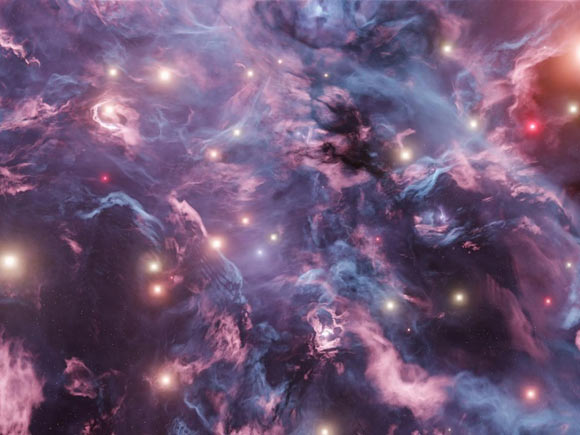 Image credit : Adelaide University
In the Stargate episode "The Torment of Tantalus", four ancient races bring the elements we know as the Periodic Table into a universal language for mutual benefit. Their Alliance is a peaceful, powerful force upholding the cosmic cause for positive value proposition without violence. Paradoxically, while studying the array of structures and symbols appearing above him, Daniel points his gun in a random act of unthinking demonstration. 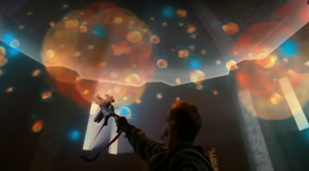 We live in a world that we largely take for granted, without much consideration for our universal fate. We know there is evidence for the existence of other species but we find it hard to accept, driven as we are to believe that we are the centre of a Universe we barely understand. Regardless of files, encounters, film footage or government facilities, there are still many people who firmly believe that we are the only form of life on an intergalactic scale. Instead we have readily accepted the introduction of a Metaverse, an illusionary superpower that has our social interests all wrapped up in the form of scrolling media, a relatively new invention that has reduced our attention span to just 3.5 seconds, typically less than that of a goldfish. If we were to equally readily accept the existence of a Multiverse, an array of interlocking dimensions that allows all possibilities to simultaneously occur, we would unlock our own potential and break through to the realms of quantum mechanics where advanced intellect belongs. For 100 years we have dragged our feet, wiping them nervously on the mats of academia whose corridors refuse to welcome new ideas until they can first be proven correct, a chicken-egg paradox that has left us in the scientific Dark Ages since Einstein first thought about 'spooky action at a distance'. ‘As above, so below’ is a common saying in certain circles. We are so infinitesimally small that we become invisible from a few hundred feet in the air, yet so enormous that we count ourselves out of the quantum mechanical equation altogether, claiming that it doesn't apply to the world we know. How wrong we are in this juvenile assumption. Should you be ready to embrace the bigger picture, you will find the track opening up to a whole new realm of probability. 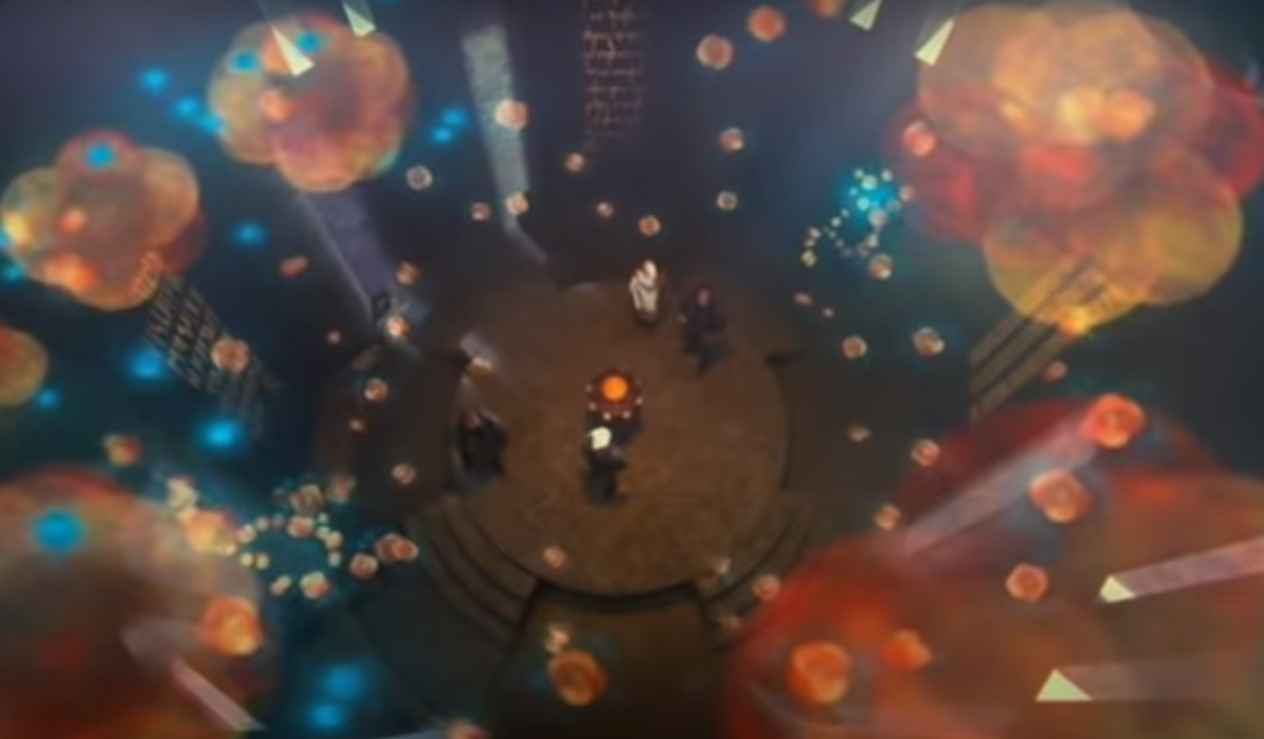 'You might have been here before, or this site may be new to you. Either way, you'd probably love to know how the quantum world translates to life and affects the way we live it. When I delivered my first course I'd no idea what to expect. All I knew was that the info piling up from research was pointing in one direction - towards self-management of quantum probabilities. Probability is key in the quantum world - it's like Uncertainty, only with potentials. Uncertainty = a factor that rules out 'Law of Attraction' templates being one-size-fits-all. Advocates will tell you that wherever you concentrate your efforts of intent will deliver the desired outcome. What they fail to tell you is that honing in on a desired outcome also carries with it an associated necessity for curve-balls to ensure that the random element of chance (Uncertainty) has a hand in the proceedings. So some aspects of the vision you desperately wanted to materialise will almost certainly be things you didn't want at all.  People who take part in my courses work collaboratively to change a collective mindset. They find keys in course content that apply to their own lives, and discover how to use them - knowing in advance that the key will fit the door. The uniqueness of the key, as with all keys, ensures that their application is personal and stays that way - they don't need to share their experiences with anyone else. Instead, they choose to share generic thought tracks, which serve to strengthen a resolve to overcome difficulties together with the assurance that it can be done. The only way to cultivate sustainable positivity is to invest knowledge of personal systems into the project, and to see evidence of this approach paying off for other people; this is first-hand experiential evidence in a 'live' situation, and frankly nothing comes closer in terms of proof. More often than not, someone soon comes out with the statement, "I had no idea that others felt like this too." Which in itself holds a key, does it not, proving the generic element has as much to do with feeling as it does with trains of thought. Understanding where a feeling comes from is the secret to unlocking trap doors. With the help of collaborative energy, a negative culture turns into a positive one because those trap doors then remain forever unlocked. The same people who were guarding negative processes like down-time and blame-driven action (silo mentality, responsibility resistance) lose the sense of protectiveness in feeling that there was some benefit to be gained from maintaining such behaviour. They lose the sense of righteousness concerning that approach because they finally get to see the benefits of doing things differently, of sharing in positive outcomes, and ultimately of feeling good about coming to work every day. In Testimonials (the page is linked below) you'll find plenty of examples - people expressing surprise at just how much has been achieved personally and collectively. Sustainability is a feature of Quantumology courses and to be honest I am amazed myself at how reliably this proves to be true. This week I had an email from a Headteacher who took part in a course at his school - you can read his words on this page. Almost a decade after the course was delivered, staff have not looked back and results have spoken for themselves ever since.
When I walk the dog, it's lovely to catch a sunset or see a hawk fly by, to hear skylarks proclaiming through the summer and listen to the trees whisper lullabies in autumn. Coming home to a hot drink and warm company is lovely too. There are things in life that are not so lovely, and times when familiarity gets the better of contentment. Understanding duality, uncertainty, and principles of self-management in spacetime are among the components that make change work and keep it running without effort because sustainability is like perpetual motion - it does not need exertion of force to maintain momentum. Energy has a funny way of taking care of itself. Trust me, I've only jumped in to claim this word. "Wavicle" is a word that could currently be construed as a component of 'word salad' or some kind of Woo by scientists of certain persuasions. Nevertheless, we need a new identity for quantum particles that are not particles, and are not waves either, but which can oscillate between the two when nobody is looking. Presently the entry on Wikipedia is devoid of any definition. About time someone did something about that. 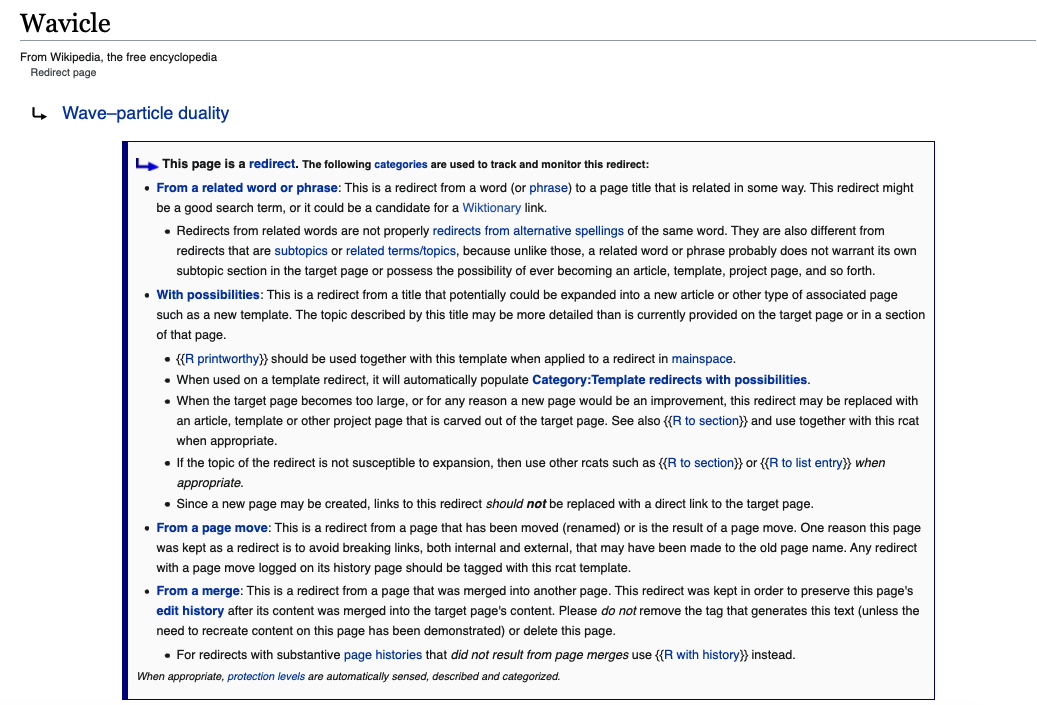 Let's see if it looks any different by the time you come to read this post.
https://en.wikipedia.org/?title=Wavicle&redirect=no  The speed of Light is all very well. As a measurement, it's useful in gauging distance between stars and galaxies. But to say that nothing in the Universe can travel faster is a statement reminiscent of the age when the Earth was said to be the centre of the Galaxy, or the Solar System, or even at one point the centre of the Universe. We have a tendency to adopt a hugely inflated opinion of ourselves. When that opinion comes crashing down to earth we don't much like the effects, so tend to avoid inviting such catastrophes. Sometimes, though, a catastrophe is unavoidable, much as the Ultraviolet Catastrophe was unavoidable in physics. When something absorbs/emits every frequency of everything that Is, something has to give. Constants might well be first in line. We are constantly bemoaning things. The state of the planet, its governance, our failures in husbandry. Our lot, our position, our responsibility. We bemoan our health, potential, direction of progress and lack thereof. All we do, really, is moan. Perhaps we've been trained this way. Perhaps we're so accustomed to negativity in the news that the new normal is really not very far away from the old one, and we're kidding ourselves that things have changed. 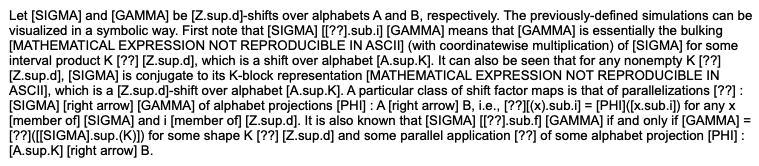 Physics has the same problem. Look at any paper describing an equation and you'll see text that says something like, "If X equals Y then Z can be A, and B will be equivalent to C." Everything the maths tells us is coming from a place of safety, where symbols are sacred and the numbers don't really matter because it's all relative anyway, the solution a product of its own device. This video slashes the speed of light into silos for further management, asking questions of the constant that even Max Planck might approve of. Where there's light, there are things to be seen. The trouble is, we can only ever see a tiny slice of the bigger picture.  The word 'Super' is all very well but when it precedes a description in physics it means something beyond the state of goodness we generally ascribe to the principle. Something that is 'superb' is a great thing, a positive thing, a thing of beauty. So it should be across the board, one would think, but in quantum mechanics 'Super' is relative, superlative not as an expression of praise, but more often one of despair. The superlative qualities of the quantum realm are yet to be defined; including as they do Uniqueness and Entanglement, products of Uncertainty and Non-locality - therein being the classic juxtaposition of One versus All, for we do not know to what extent we are subject to entanglement as it's not a measurable commodity in the real world, but we do know that we are all unique. Our uniqueness is something we take for granted unless we're placing ourselves in the bowl of humanity and bemoaning it as we are wont to do. How many people, I can ask myself now, can sit at their desk with a collared dove on one side and a tawny owl on the other, both more than happy to be there, for the owl is blind and the flightless dove has figured that out, so their relationship with each other is ambivalent while their relationship with me is mutually affable. This situation might be shared by many others with different birds, by people with animals of all kinds accompanying them on the journey without destination. But these birds beside me are unique, and that satisfies the desire to be One which humans seem to possess and other creatures seem to perceive no need of. Our separation within the Supersystem carves out for us an illusion of grandeur, an unfortunate trait that has led to where we are now, on a planet suffering the consequences. It's okay to eat and drink the products of miserable lives and savage deaths; for some, consuming the by-products of endangered species is the best thing to do. Buying from supermarkets is a normal thing to do - every supermarket buys into the system no matter what you choose to purchase from it. They sell a lot of tuna. Most people buy milk. Coffee. Palm oil - who checks the ingredients? They sell what tastes nice, where pleasure and hunger cement an easy agreement. No wonder we are fraught with fears of loss on a promise of infinite nothingness. What have we to look forward to, when things are unlikely to change? These relationships of ours, where are they going, when neither can see a way to put right what is so often determined to be wrong? You're more than likely asking now what the hell that has to do with quantum mechanics. 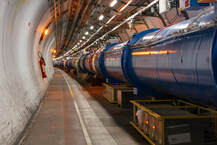 "So, how does quantum mechanics relate to us, then?" The Question everyone asks. The science is all very well, interesting and everything, but where does it go? Into more Large Hadron Colliders? Into 'defence'? Who are the ones who need to know on a subject inviting a huge audience, defended by mathematicians, opening doors to a realm of reality we know virtually nothing about?  Let's check out the reality we do know something about. Messy and turbulent, a sea of relationships sailing in and out of time zones and occasionally getting lost in the Bermuda Triangle. That place songwriters wax lyrical over where there's no space and time while scientists struggle with words that seem over-empathic for quantum bits. The messy sea of relationships battles moment by moment with itself, see-sawing between what one sees versus the other, one's impact on the other's roll, standing waves of stand-off with nothing in between. Love Is, that horrendous struggle to stay on top, of what? Ourselves? Someone else? Someone's parent? Someone's child? We don't want to lose control, but we lose control without a moment's hesitation, to have to regain it again, within or without, or both at the same time - baulking the Uncertainty Principle. Meanwhile, it seems that telepathy isn't a wild and crazy assertion after all, but a proven phenomenon, and can happen to you: en.m.wikipedia.org/wiki/Quantum_pseudo-telepathy?fbclid=IwAR1TjCxmh5D-SS2jQFqizZKdOHZug5XyIJDWoLytgnAsxsD2asWBSb7b05c  These waves we ride, this Entropy, the decay of a system that should stay as it is, right and true, are all we know. We surf a sea of uncertainty continuously, declaring wit to be compassion, strength to be fulfilment of a wealth that has everyone by the balls because it can. Because once upon a time there were shekels of silver and bullocks to sacrifice to a god that didn't care, really, what they did, so they went on doing it, spoiling each other's tents. Every time they repented on killing their neighbours, they went back to bullocks and shekels and earned themselves the freedom to go do it all over again. We haven't learned much, since this is still happening. We keep talking about 'a god within us' and 'god particles' and trying to keep gods out of the conversation if we're being physicists wanting a sensible conversation. Keeping a belief system out of an equation is a non-starter. Look at the equations and the descriptions surrounding them. The mathematician believes that provided he keeps adding another symbol to a previous set of symbols, he is going to come up with an answer. He is writing Code for himself in an effort to decipher the world that exists around his desk, in his brain, his eyes, his hands. His thoughts. His particle version of humanity.  Wave-particle duality ensures that the version of he, me, you, them out there that existed just now are now a wave form, and will be until the next moment arrives and is gone, advanced and retarded ad infinitum. Uncertainty ensures the next moment won't be like any that have gone before, nor can be exactly as imagined. Imagination brings things into being, makes castles in skies into realities that look very different, makes love a place of safety for a moment, before fear crashes in to sever the connection.
3www.deviantart.com/moonbeam1212/art/Black-and-gold-112740473 What is imagined has already happened. Nothing the same way twice. Entanglement ensures the connections won't be severed in any way other than ordained by the pattern. The order of things. The symmetry. The paradox. For if vision is his only validation, most of our lives are not real. That's probably the only line we need to know, right now. 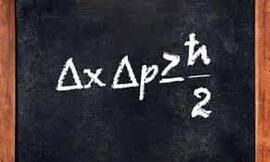 For a hundred years, Uncertainty has been a cornerstone of quantum mechanics, preventing the measurement of two factors at once. Werner Heisenberg, who first proposed the Principle, needed to explain that the position and momentum of a quantum object (such as an electron) could not be determined simultaneously. If you are measuring one, you cannot concurrently measure the other. Now, Uncertainty has had an extension built, and the doors are open for further interpretation. Truly, after so many decades of fierce opposition to any extrapolation of the U.P., scientists have come round to the idea that the matter of inescapable fuzziness in the quantum world may well hold keys to other mysteries in Nature. Should you look up 'Expanded Uncertainty' on your search engine, you'll find a lot of maths and very little else, so rather than send you to links that are full of numbers, I'd like to invite you to join an expedition into unchartered territory.  We know that Nature doesn't like straight lines, or symmetry, or identical versions of things. Nature likes uniqueness, asymmetry, and fractal patterns. All natural objects, including snowflakes and sand grains, are unique. That's not to say that randomly across the desert there wouldn't be one or two granules that match, but if you were to look closely at their atomic structure, you would most likely find a difference in there somewhere. This video explores the ramifications of the Uncertainty Principle and its extensions, wherein your own world may benefit from the opportunities it represents.  Symbiosis is a feature of Nature crossing species and circumstances all over the cosmos. We have little idea of how deep symbiosis may go in quantum terms, but the more we delve into the realms of particle physics, the more symbiosis we seem to find. In this video, correlation between symbiotic features of the Universe and synchronicity is explored. There is much further to go, we can be sure, in our search for what lies at the depths of physics. While we're waiting for next steps to be taken, enjoy a few minutes with me and my owl... |
AuthorKathy is the author of Quantumology. She met up with quantum mechanics in 1997, pledging allegiance to its sources thereafter. These are her personal thoughts and testimonies. Archives
April 2023
|
 RSS Feed